Environmental compliance & wash water recovery
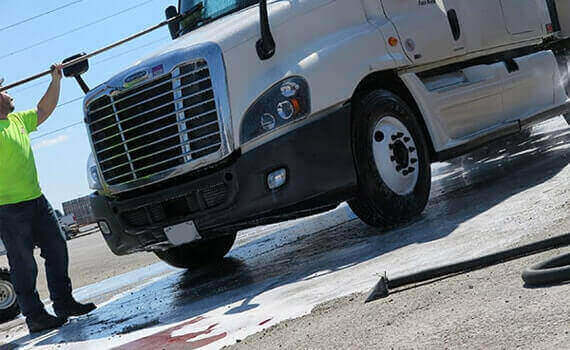
On-site, as-parked fleet vehicle washing is legal when it is performed correctly by a qualified contractor such as QMI.
How we recover wash water
During every service, all water generated by the wash process is collected and pumped to an appropriate discharge point. Many of our collection methods are proprietary, but you will receive a written description of exactly the methods we will use on your fleet.
The pollutant content of wash water can normally be brought well below local sanitation department discharge limits. Typical discharge points include:
- On-site clarifiers or oil/grit separators
- The sanitary sewer
- Tank and haul: when sanitary sewer discharge is not appropriate or possible, we haul the collected water to an appropriate disposal site
Industry leader in Best Management Practices
QMI is noted as an industry leader in the western U.S. for developing Best Management Practices for in-place fleet vehicle washing that are supported by the EPA and various other local, county, and state agencies.
What NPDES means for your facility
The 1987 amendments to the Clean Water Act required the EPA to issue permits for storm water discharge, called the National Pollutant Discharge Elimination System (NPDES) permit. In California, the State Water Resources Control Board administers a statewide general permit, so every business in the state, public and private, is covered by it and must follow its requirements.
Since our methods yield zero discharge to the storm system, our customers do not need an individual NPDES permit as far as vehicle washing is concerned. In our experience with county and city agencies, there are generally no local permitting requirements beyond the broader NPDES requirements, although each city or county may add its own.
The two goals of the NPDES program
- Eliminate non-storm water discharges to the storm system, such as water from truck washing or cleaning forklifts, containers, and loading docks. That water should be collected and diverted to a clarifier, an oil and grit separator, or the sanitary sewer.
- Keep pollutants away from rain water, such as fluids or debris left on the ground after vehicles are serviced outside. Good housekeeping eliminates these exposures.
As the EPA’s manual puts it, storm water management “is a straightforward process that can be accomplished by facility managers and employees.” Managing the run-off from vehicle washing is a straightforward activity, and we can assist with permitting questions from municipalities if needed.
Please note: although we have consulted various public agencies and professional engineers specializing in this area, we do not warrant the accuracy of our opinions or conclusions. We encourage you to consult your company’s environmental staff or a professional consultant.
Ready for a cleaner, compliant fleet?
Inside California call (888) 942-7QMI (7764). Outside California call (951) 549-8383. A real person answers during business hours, and field supervisors take calls after hours.